Step 5: Maintaining the Bin

Creating a successful vermicomposting setup is an incredibly rewarding process, not only for the high-quality compost you can produce but also for the benefits it brings to the environment. One of the most crucial steps in this process is maintaining your worm bin effectively. Here’s a comprehensive guide to help you ensure your vermicomposting system thrives.

Understanding Vermicomposting

Vermicomposting uses earthworms to convert organic waste into nutrient-rich compost, known as worm castings. This method is efficient, environmentally friendly, and a fantastic way to reduce kitchen waste. The key players in this process, red wigglers (Eisenia fetida), are voracious eaters known for their composting abilities.

Setting Up Your Worm Bin

Before we dive into maintenance, let’s quickly recap the setup process. Choose a bin that’s shallow and wide, as worms are surface dwellers. The bedding, usually moistened shredded newspaper or cardboard, should be fluffy to allow for air circulation. Add your worms and organic waste, and you’re good to go.

Step 5: Maintaining the Bin

Location is Key

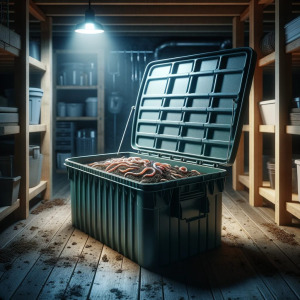
The image above showcases a worm bin situated in a cool, dark area, which is an ideal setting for maintaining a healthy worm farm. Such a location ensures the worms are kept in a conducive environment away from extreme temperatures, which could be detrimental to their well-being.

Keep your worm bin in a cool, dark place. Basements or shaded areas in a garage are ideal, but if you’re limited to outdoor spaces, ensure the bin is well-shaded. Extreme temperatures can be harmful to your worms.

Moisture Management

The image illustrates the interior of a worm bin, focusing on moisture management essential for vermicomposting. In the depicted setup, the bedding's ideal moisture level is emphasized, akin to that of a wrung-out sponge. This balance is crucial as overly wet conditions can lead to odor problems and potentially drown the worms, while an environment that's too dry might not support their survival. Strategies for maintaining this balance include adding dry bedding to absorb excess moisture or lightly spraying water to increase humidity if the bedding becomes too dry.

The bedding should be as moist as a wrung-out sponge. Overly wet conditions can lead to odor issues and drown your worms, while too dry an environment isn’t conducive to their survival. If the bin is too wet, add dry bedding. If it’s too dry, spray water lightly to achieve the desired moisture level.

Feeding Your Worms

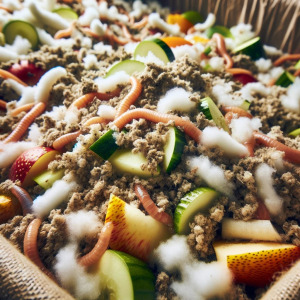
Illustration of feeding worms with fruit and vegetable scraps under bedding in a compost bin to promote efficient composting while preventing pests and odors.
Feed your worms a balanced diet of fruit and vegetable scraps, avoiding meats, dairy, and oily foods which can attract pests and cause odors. Chop the scraps into smaller pieces to speed up the composting process. Bury the food under the bedding to avoid fruit flies.
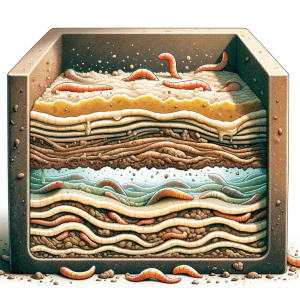
Harvesting the Compost

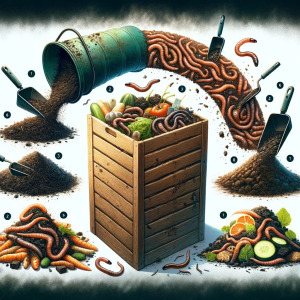
The image illustrates the process of harvesting worm castings from a compost bin. It shows one side of the bin filled with rich, dark compost and worms, while the other side is prepared with fresh bedding and food scraps. The visual emphasizes the method of encouraging worms to migrate to the new food source, making it easier to collect the valuable worm castings from the other side for use as a plant fertilizer.

Every few months, it’s time to harvest the worm castings. This rich, dark compost is an excellent fertilizer for your plants. To harvest, move the compost and worms to one side of the bin. Then, add fresh bedding and food scraps to the other side. Over a few weeks, the worms will migrate to the new food source, allowing you to easily scoop out the castings.

Troubleshooting

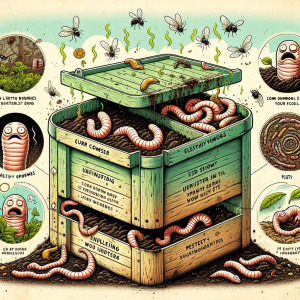
The image above provides an illustrative guide to troubleshooting common issues in vermicomposting, such as odors, pests, and worm health.

Be on the lookout for common issues such as odors, pests, and the health of your worms. A well-maintained bin should have a fresh, earthy smell. If you encounter problems, refer to vermicomposting resources or community forums for solutions.

Conclusion

Maintaining your worm bin is a simple yet vital step in the vermicomposting process. By providing a suitable environment for your worms, you’ll ensure their health and productivity, resulting in a continuous supply of high-quality compost for your garden. Remember, a little attention goes a long way in sustaining this eco-friendly cycle. Happy vermicomposting!

Leave a Comment

Shopping Cart
Scroll to Top